 Kado Home
Kado Home
Kado Home
Arranging a sectional sofa in a small living room can be challenging, but it’s possible with the right approach. Interior design expert Emily Henderson once noted, “A sectional can anchor the room and create a cozy, inviting space.” This statement emphasizes the importance of placement and style when maximizing limited square footage.
When considering how to arrange a sectional sofa in a small living room, focus on functionality and flow. Measure your space carefully. This allows for a layout that improves movement throughout the room. Each choice impacts the overall feel. A sectional in the wrong place can make the area feel cramped.
Remember, it’s not just about fitting furniture in. Think about comfort and warmth. Use accessories, like colorful cushions or a vibrant throw, to add character. Lighting also plays a crucial role. Natural light can open up the space. This makes small areas feel larger and more welcoming. Even with challenges, there are plenty of ways to make a small living room feel spacious and stylish.
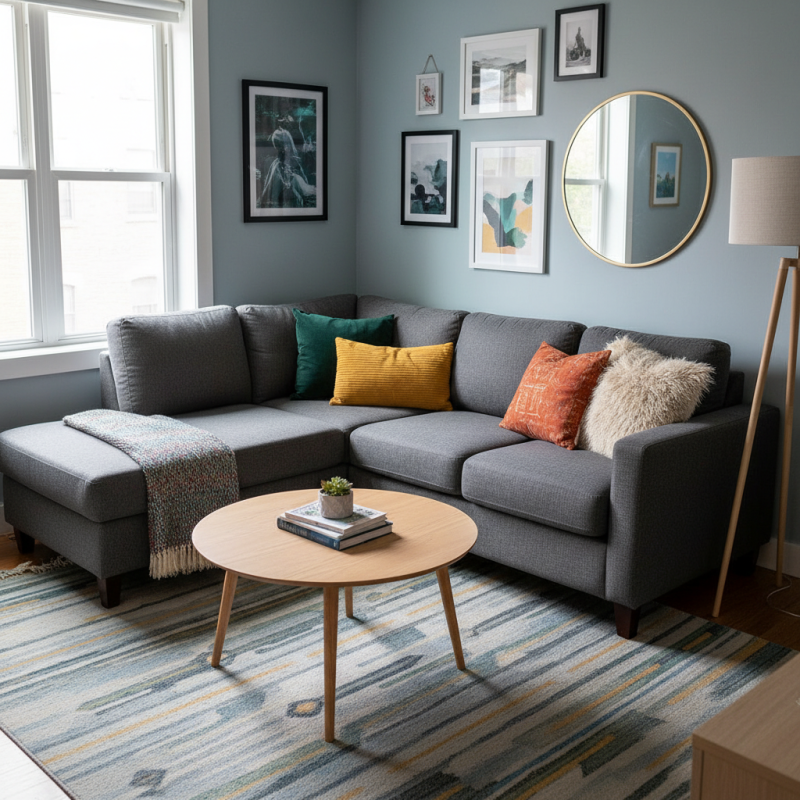
Evaluating your small living room space is crucial when arranging a sectional sofa. According to the National Association of Realtors, 56% of home buyers prefer a spacious living area. However, many small living rooms struggle to meet this desire. Understanding the dimensions of your room and the scale of furniture is key. Measure your space accurately. A common mistake is overestimating the available area.
Consider the placement of doors and windows. A sectional sofa should not obstruct these openings. An effective layout often involves scaling down the size of the sofa. The right sectional can provide comfort without overwhelming the space. Many experts recommend a sofa that doesn't exceed two-thirds of the room length. This ensures walking pathways remain unobstructed, making the room feel larger.
Don't forget about flow and functionality. A sectional can anchor the seating area, but it may also create visual clutter if not placed thoughtfully. Sometimes, an L-shape configuration works best for tight corners. Reflect on how you use the space daily. Can you easily navigate? Does the arrangement encourage conversation? These are vital points that help in creating a welcoming atmosphere.
| Dimension | Measurement (in feet) | Recommended Sofa Size | Arrangement Tips |
|---|---|---|---|
| Living Room Area | 10 x 12 | L-Shaped Sofa (72”) | Place against a corner to maximize space. |
| Pathway Width | 2.5 | Curved Sectional (75”) | Ensure at least 2-3 feet clearance for movement. |
| Distance from TV | 8 | Modular Sofa | Keep sofas 6-10 feet from the TV for optimal viewing. |
| Coffee Table Space | 3 | Compact Coffee Table | Leave 18 inches between the sofa and table. |
| Overall Room Functionality | N/A | Flexible Sofa Arrangement | Choose versatile upholstery to suit your themes. |
: Measure the room accurately. Be careful not to overestimate the available area.
Choose a sofa that is no larger than two-thirds of the room length to maintain walking space.
An L-shape configuration is ideal for corners. Keep pathways clear to enhance movement and flow.
Allow at least 18 inches of space for easy navigation and comfort when using the coffee table.
Multi-functional pieces, like a sectional with storage, can maximize space effectively.
Use a cohesive color palette and contrast textures for visual interest, but balance is key.
Natural light is best, but lamps can enhance textures and create a warm atmosphere.
Light colors can create an open feel. Keep busy patterns to a minimum to avoid clutter.
Yes, reflect on your choice of layout. Imperfect arrangements can still function well and feel comfortable.
Arrange seating to promote easy access and avoid blocking pathways, which encourages interaction.
Arranging a sectional sofa in a small living room can be both a challenge and an opportunity to enhance your space's functionality. To effectively approach this task, begin by evaluating the dimensions of your room to understand how to arrange a sectional sofa in a small living room that maximizes comfort and flow. Consider the sectional's size, ensuring it fits without overwhelming the area, and explore placement strategies that facilitate easy movement and accessibility.
In addition to spatial considerations, harmonizing colors and textures with the sectional can significantly impact the room's overall aesthetic. Opt for complementary accessories that enhance the small living room while maintaining balance and cohesion. By thoughtfully incorporating these elements, you can transform a compact area into a cozy and inviting environment, fully utilizing the advantages of a sectional sofa.
