Kado Home
China’s modular sofa industry has moved from simple mass production toward flexible, design-led furniture manufacturing. Today, Chinese suppliers offer many configurations for apartments, hotels, offices, and family living rooms. This article explores the China top 10 modular sofa types and the practical reasons behind their popularity.
Why are modular sofas becoming so popular? Their strongest advantage is adaptability. Homeowners can separate a three-seat sofa into individual units, add a corner section, or reshape the layout after moving. Imagine a low-profile beige sofa beside a window, with its ottoman shifted forward for evening use. That flexibility saves space without forcing buyers to replace the entire sofa. It also supports changing lifestyles, including remote work, growing families, and frequent interior updates.
Chinese manufacturers often combine kiln-dried wood frames, high-density foam, washable covers, and durable upholstery. However, quality differs widely between factories. Buyers should check frame construction, foam recovery, stitching, fabric abrasion ratings, and replacement-part availability. A lower price may hide weaker connectors or uneven cushions. This deserves careful attention.
The top ten types may include L-shaped, U-shaped, armless, sectional, sleeper, recliner, curved, cloud-style, storage, and outdoor modular sofas. Each design serves a different room and budget. Some look impressive online but feel too deep in smaller homes. That gap matters. By examining materials, comfort, layout flexibility, and manufacturing reliability, readers can make more informed purchasing decisions.
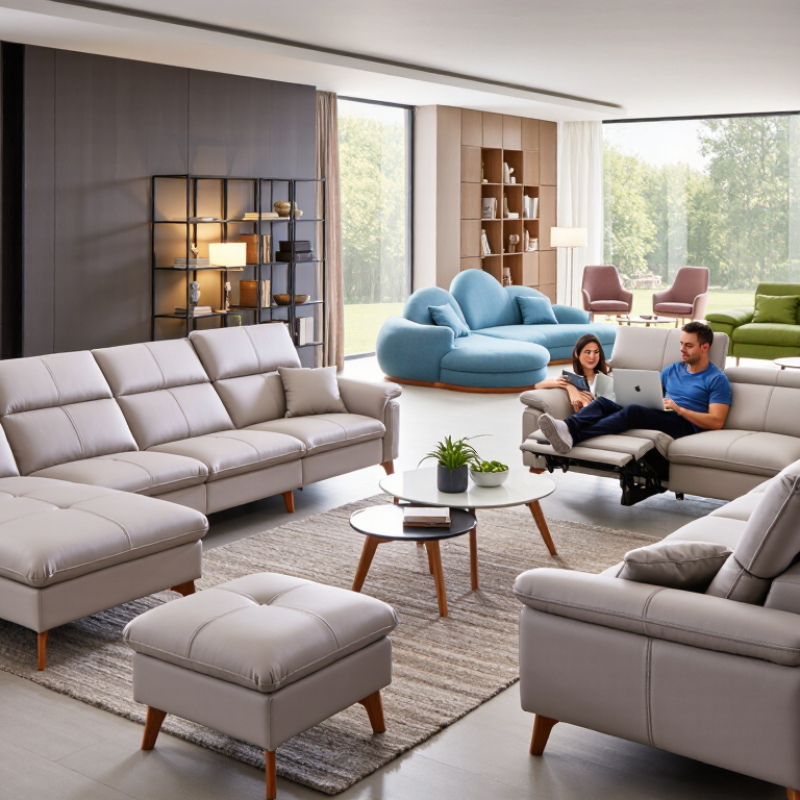
A modular sofa is a seating system made from separate units. Each unit can stand alone or connect with others. Common types include straight, L-shaped, U-shaped, corner, chaise, pit, armless, recliner, sleeper, and storage designs. Their popularity in China reflects changing homes, smaller apartments, and flexible family routines.
Design begins with a stable frame, supportive foam, durable fabric, and reliable connectors. Manufacturers usually build seat, corner, ottoman, and backrest modules separately. This approach simplifies production, packaging, and delivery through narrow lifts or stairways.
Homeowners can create an L-shape for daily use, then move the ottoman when guests arrive. Some models also offer washable covers, hidden storage, or adjustable headrests.
In my experience, accurate room measurement matters more than attractive images. Measure doorways, lift interiors, wall lengths, and walking space. A beautiful sofa can still block a balcony door. Connector strength deserves attention too. Weak joins may cause movement or uneven gaps after frequent use.
I once underestimated a sofa’s arm width, and the planned arrangement felt cramped. That mistake remains useful: modular furniture is flexible, but not magically space-saving. Buyers should check material specifications, load guidance, cleaning instructions, and applicable safety certifications before ordering.
China Top 10 Modular Sofa Types: Why Are They So Popular?
The top 10 modular sofa types made in China include L-shaped, U-shaped, curved, armless, chaise, recliner, sleeper, storage, pit, and movable-ottoman designs. Each type supports a different room plan. L-shaped units suit apartments, while pit sofas create a deeper family seating area. Storage modules hide blankets beneath firm cushions. Sleeper modules add practical value for small homes. China’s mature upholstery supply chain supports varied sizes, fabrics, foam densities, and metal fittings. Buyers can request compact 2.6-meter layouts or expansive combinations exceeding five meters.
Market data helps explain this growth. Grand View Research valued the global furniture market at about US$516.6 billion in 2022. It also projected a 5.2% compound annual growth rate from 2023 to 2030. Modular seating benefits from this wider demand for flexible home furniture. A 2024 CSIL industry outlook also identified China as a leading global furniture manufacturing and export base. That scale can reduce tooling costs and shorten development cycles. It does not guarantee quality.
My sourcing experience suggests checking frame joints, rebound foam, seam alignment, and connector strength before comparing prices. Ask for abrasion testing and formal material documentation. Some low-cost models look impressive online, yet their clips loosen after repeated movement. That weakness matters. Buyers should also confirm replacement covers, carton protection, and installation instructions. Chinese manufacturers offer remarkable customization, but excessive options can create delays and inconsistent color matching. Careful specifications remain essential.
| No. | Modular Sofa Type | Typical Configuration | Common Materials and Features | Typical Size Range | Why It Is Popular | Typical Applications |
|---|---|---|---|---|---|---|
| 1 | L-Shaped Modular Sofa | Two-seat or three-seat section combined with a chaise or corner module | Fabric, leather, or synthetic upholstery; hardwood or engineered-wood frame; high-resilience foam | Approximately 240–360 cm wide and 150–220 cm deep | Uses corners efficiently, provides generous seating, and suits many apartment living rooms | Apartments, family living rooms, show homes, and hospitality suites |
| 2 | U-Shaped Modular Sofa | Central seating unit with two facing chaise or return modules | Deep cushions, removable covers, reinforced connectors, and optional headrests | Approximately 300–420 cm wide and 180–250 cm deep | Creates a social seating area and offers substantial capacity for larger households | Large homes, media rooms, lounges, and family entertainment spaces |
| 3 | Armless Modular Sofa | Armless center seats arranged with corner, ottoman, or end modules | Clean upholstery lines, compact frames, removable cushion covers, and flexible connectors | Each seat is commonly 70–100 cm wide and 85–110 cm deep | Allows many layout combinations and can increase seating within a limited footprint | Modern apartments, offices, co-working areas, and reception spaces |
| 4 | Modular Sectional Sofa with Ottoman | Two- or three-seat sectional paired with a movable ottoman | Matching upholstery, foam-filled ottoman, concealed storage options, and non-slip feet | Sofa width of approximately 200–320 cm; ottoman commonly 70–110 cm wide | The ottoman can function as a footrest, coffee-table surface, extra seat, or chaise extension | Living rooms, flexible rental interiors, reading areas, and family rooms |
| 5 | Modular Sofa Bed | Separate seating modules combined with a pull-out, fold-down, or convertible bed unit | Steel or reinforced mechanisms, high-density foam, durable upholstery, and storage compartments | Sofa width commonly 180–300 cm; sleeping surface varies by mechanism | Combines everyday seating with occasional sleeping capacity, saving room and furniture costs | Guest rooms, studio apartments, serviced apartments, and compact homes |
| 6 | Reclining Modular Sofa | Individual reclining seats connected with fixed or corner modules | Manual or electric reclining hardware, padded armrests, metal frames, and optional USB ports | Each seat is commonly 80–105 cm wide; extra clearance is needed behind the back | Provides personalized comfort and can be expanded as household needs change | Home theaters, media rooms, family rooms, and relaxation areas |
| 7 | Low-Profile Modular Sofa | Low-seat center modules, corner units, and chaise sections arranged in a straight or L-shaped layout | Deep seats, broad cushions, minimal legs, and cotton-blend, linen-look, or polyester fabric | Seat height commonly 35–45 cm; total depth often 90–120 cm | Creates a relaxed contemporary appearance and visually opens up low-ceiling interiors | Contemporary homes, design-led apartments, lounges, and informal reception areas |
| 8 | Curved Modular Sofa | Curved center, crescent, or wedge-shaped modules joined to form a rounded seating arrangement | Molded foam or shaped upholstery, reinforced internal frames, and coordinated curved back cushions | Overall width commonly 220–380 cm; depth often 95–125 cm | Adds a distinctive sculptural look and encourages face-to-face conversation | Boutique hospitality, reception areas, show homes, and spacious living rooms |
| 9 | Storage Modular Sofa | Modular seats or chaise units with lift-up bases, drawers, or integrated storage compartments | Hinged panels, reinforced storage boxes, durable fabric, and high-resilience seat foam | Typical seat depth is 85–110 cm; storage volume depends on the module design | Makes practical use of unused space and helps keep compact interiors organized | Small apartments, family homes, dormitories, and multifunctional rooms |
| 10 | Outdoor Modular Sofa | Individual corner, center, chaise, and ottoman units arranged for patios or terraces | Aluminum or treated steel frames, synthetic wicker or outdoor fabric, quick-dry foam, and weather-resistant cushions | Each module commonly measures 70–100 cm wide and 70–95 cm deep | Can be rearranged for different outdoor spaces and is designed for easier maintenance and seasonal storage | Balconies, patios, gardens, poolside areas, resorts, and outdoor dining spaces |
Note: Dimensions are typical industry ranges and may vary according to the selected module combination, upholstery, frame construction, and design requirements.
China’s top modular sofa types include straight units, corner layouts, chaise sections, armless seats, sleepers, recliners, storage modules, curved pieces, ottomans, and compact apartment sets. Their appeal begins with structure. A kiln-dried hardwood or reinforced metal frame supports repeated movement, while high-resilience foam protects shape better than soft filling alone. According to Grand View Research’s 2024 furniture analysis, modular furniture demand is expanding because flexible layouts suit smaller urban homes and changing household needs.
Materials also shape daily comfort. Polyester blends resist abrasion, while genuine leather offers easier surface cleaning but needs controlled humidity. Performance fabrics can help with spills, although no fabric is truly maintenance-free. Powder-coated steel connectors improve alignment, yet weak clips may create movement between sections. Practical testing should include sitting, shifting, and reconnecting each module. I have seen attractive sofas fail at this point.
Customization makes modular designs commercially useful. Buyers can select left- or right-facing chaises, seat depth, arm width, firmness, upholstery, and storage placement. A 2023 Statista Consumer Insights report found that home furniture buyers increasingly value functionality and space efficiency, supporting this flexible purchasing pattern. However, too many options can confuse customers and increase lead times. Clear configuration drawings, measured room plans, and replaceable covers reduce that risk. Manufacturers should also verify seam strength and load performance against applicable furniture safety standards, such as EN 12520. Comfort remains personal. Data helps, but a ten-minute sitting test often reveals what specifications miss.
Chinese modular sofas are popular worldwide because they fit changing homes and changing lifestyles. A three-seat layout can become an L-shaped corner within minutes. Individual sections also pass through narrow doors and apartment elevators more easily. This practical flexibility matters in cities, rental homes, and family living rooms. Many Chinese manufacturers offer varied fabrics, foam firmness, leg styles, and storage options at competitive prices. Their production experience supports consistent sizing, cleaner stitching, and efficient international shipping.
Tips: Measure every doorway, not only the room. Check connector strength, foam density, fabric test results, and frame materials. Ask for clear warranty terms and replacement-part support. Removable covers are useful, but zippers should feel strong and easy to operate. Request assembly instructions before ordering. Small details prevent expensive surprises.
Worldwide demand is not based on price alone. Buyers appreciate modular designs that can expand after moving or welcoming guests. Performance still varies between suppliers. Some cushions soften faster than expected, while loose connectors can create movement during daily use. A reliable purchase requires samples, technical documents, and honest comparison. I would not choose a sofa from photographs alone. Sit on the cushions, inspect the seams, and test how firmly each module locks. The best Chinese modular sofas combine adaptable design, export experience, and dependable quality control, although buyers must still verify the details themselves.
Global consumer appeal index based on space efficiency, flexibility, comfort, multi-functionality, and suitability for modern homes.
L-shaped and chaise sectional sofas rank highest because they combine flexible layouts with efficient use of living-room space. U-shaped, pit, sleeper, and recliner configurations are also popular because they support larger households, relaxation, and multifunctional living. Chinese modular sofas are widely adopted for their adaptable designs, competitive production efficiency, removable components, and suitability for changing home layouts.
Choosing the right modular sofa starts with your room, not a trend. Measure the wall, doorway, lift, and walking paths before ordering. Leave at least 70 centimeters for comfortable movement. A beautiful sofa can still fail when its corner blocks a cabinet.
I usually mark each module’s footprint with masking tape. This reveals whether a chaise interrupts the coffee table or television view. Test the seat depth, back support, and cushion firmness in person whenever possible. Softer cushions feel inviting, but they may need frequent reshaping. Firmer seats often support longer sitting sessions. Neither option suits everyone.
Consider how your household actually lives. Families with children may need removable, washable covers and tightly woven fabric. Homes with pets benefit from durable surfaces and accessible cleaning gaps. Check the frame, connector strength, warranty terms, and replacement-module availability. These details matter more than decorative stitching. I once selected a deep chaise for a small lounge, and the room soon felt crowded. I should have measured the turning space more carefully. Choose a configuration that can change with your needs, but do not pay for flexibility you will never use. Test the sofa for ten minutes. Sit naturally. Stretch your legs. Examine it from every angle.
Common designs include L-shaped, U-shaped, curved, armless, chaise, recliner, sleeper, storage, pit, and movable-ottoman sofas.
An L-shaped layout often fits apartments well. Compact configurations around 2.6 meters can preserve walking space.
Leave at least 70 centimeters for comfortable movement. Measure doorways, lifts, walls, and turning paths before ordering.
Mark each module’s footprint with masking tape. Check the chaise, coffee table, cabinet, television, and walking route.
Yes. Storage modules can hide blankets under firm cushions. They add function without requiring another cabinet.
Check frame joints, foam rebound, seam alignment, connector strength, and material documents. A low price may hide weak clips.
Softer cushions feel welcoming but may need reshaping. Firmer seats can support longer sitting. Personal comfort still matters most.
Removable, washable covers and tightly woven fabric are practical choices. Accessible cleaning gaps also help remove crumbs and fur.
Yes. Separate modules can support new room layouts. However, unused flexibility may increase cost without adding real value.
Sit naturally for ten minutes. Stretch your legs. Test the back support, seat depth, fabric, and cushion response.
Ask for abrasion testing, formal material documentation, warranty terms, and replacement-cover information. Color matching can still be inconsistent.
No. A mature supply chain can offer varied sizes and materials, but careful inspection remains necessary.
This article introduces modular sofas as flexible seating systems made from separate, movable units that can be combined, rearranged, or expanded according to changing needs. It explores the top 10 modular sofa types made in China, including L-shaped, U-shaped, curved, sectional, sleeper, storage, recliner, and compact designs. It also explains the importance of materials, internal structures, cushioning, upholstery, connectors, and customization options such as color, size, configuration, and functional accessories.
Why are modular sofas becoming so popular? Their adaptability, practical design, comfortable construction, and wide range of styles make them suitable for apartments, family rooms, offices, hotels, and other spaces. Chinese modular sofas are especially attractive because they often offer varied designs, efficient manufacturing, customizable solutions, and competitive value. The article also provides guidance on choosing the right sofa by considering room size, layout, lifestyle, comfort preferences, durability, maintenance requirements, and future flexibility.
