2026 Top Guide How to Tell if a Sofa Is Genuine Leather?

Time:2026-10-16 Author:Ethan
0%

Buying a leather sofa in 2026 requires more than trusting a glossy showroom label. The phrase “genuine leather” can describe real animal hide, but it does not always mean full-grain or premium leather. Some sofas combine leather seating areas with synthetic panels, which may look identical at first glance. A careful inspection can prevent an expensive mistake.

This guide explains How to tell if a sofa is made of genuine leather using practical checks and reliable evidence. Look closely at an unexposed edge, the underside, or a seam allowance. Natural leather usually shows slight variations in grain, tiny pores, and irregular wrinkles. Its surface may feel warm and flexible rather than perfectly uniform. Pressing the material can reveal soft creasing, while plastic-like upholstery often stretches differently. Smell can offer a clue, but it is not proof. Artificial fragrance may imitate leather.

Check the care label, product specifications, and written information from the manufacturer. Ask whether the sofa uses top-grain, corrected-grain, split, bonded, or faux leather. The answer matters. Request clarification about every upholstered section. A salesperson’s confidence is not technical evidence. Neither is a high price.

Small details matter.

A reliable assessment combines touch, appearance, construction, and documentation. Even experienced buyers can misread heavily finished leather, so avoid making a decision from one test alone. If uncertainty remains, photograph the material and seek an independent upholstery professional’s opinion. This approach is slower, but it respects your budget and leads to a more informed purchase.
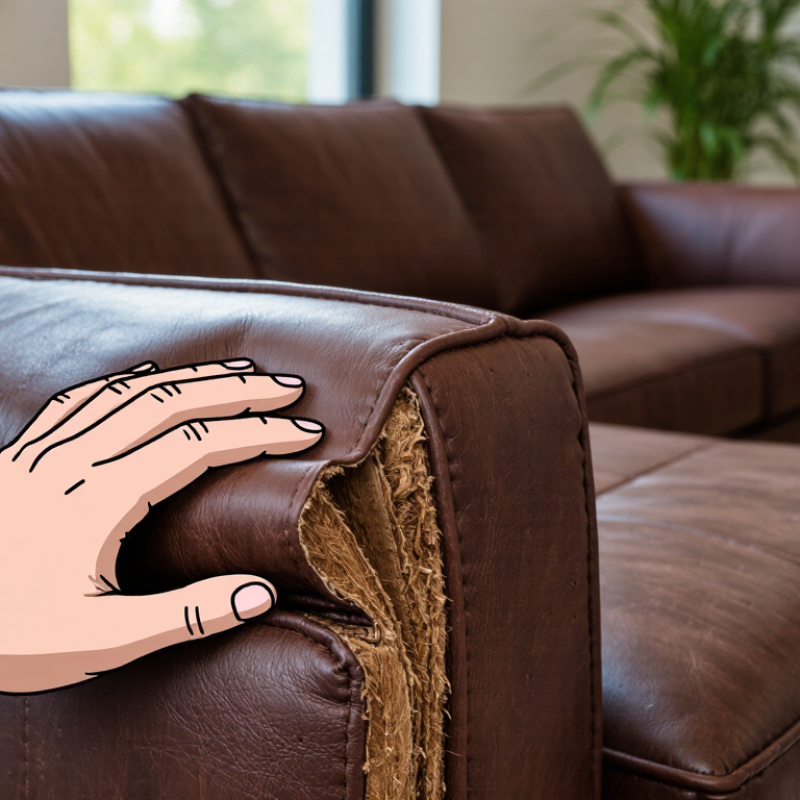
2026 Top Guide How to Tell if a Sofa Is Genuine Leather?

Identify the Leather Type and Check the Sofa’s Labels

Identifying a leather sofa starts with its leather type and product label. Genuine leather usually means real animal hide, but it does not always mean the highest grade. Look for terms such as full-grain, top-grain, split leather, bonded leather, or leather match. Full-grain leather often shows natural pores, small scars, and uneven color. Top-grain leather feels smoother because its surface has been lightly corrected. Split leather may feel thinner and less flexible. Bonded leather contains leather fibers mixed with other materials, so check the wording carefully.

Read the sofa’s label near the frame, underneath the cushions, or beneath the base. A reliable label should identify the upholstery material, not merely say “leather sofa.” Phrases like “leather seating areas” may indicate that only the seat, back, and armrests use leather. The sides and rear could be synthetic material. Check the care tag and material percentage when available. Labels matter.

A hands-on inspection adds useful evidence. Press the surface gently. Real leather usually warms quickly and has subtle grain variation. Its edges may reveal layered fibers rather than a plastic film. Smell can help, but fragrance treatments can confuse the result. I once trusted a strong leather scent and ignored the label’s “leather match” wording. That was a poor judgment. Grain patterns can also be embossed, so no single test proves authenticity. Compare the label, texture, stitching, and construction before deciding.

Examine the Grain, Surface, and Natural Markings

A reliable sofa inspection starts with the grain. Genuine leather usually shows uneven pores, small scars, and gentle changes in texture. These markings reflect the animal hide’s natural history. Perfectly repeated patterns may indicate an embossed surface rather than natural grain. Look closely under bright, indirect light. The details should vary across cushions, arms, and corners.

The surface also reveals useful clues. Real leather often feels warm and flexible, not cold or plasticky. Press one area with your fingertips. Natural leather may form soft wrinkles and slowly recover its shape. A coated surface can feel smoother and more uniform. However, modern protective finishes can reduce these differences, so touch alone cannot prove authenticity. Do not rely on a water-drop test; finishes, dyes, and upholstery treatments react differently.

Natural markings matter, but they are not a complete guarantee. A few healed scratches or subtle color shifts can support authenticity, while excessive perfection deserves closer attention. Check the underside of an exposed edge, where leather fibers may look irregular and compact. I once trusted a pleasant leather smell too quickly; fragrance can be added artificially. Ask for material details and inspect several areas, not just the showroom sample. Some mistakes happen when buyers judge one attractive cushion.

How to Tell if a Sofa Is Genuine Leather

Natural grain and visible markings are strongest in full-grain leather. Top-grain leather may retain some natural characteristics after surface correction, while split leather, bonded leather, and polyurethane upholstery generally do not show the original hide grain.

Test the Texture, Flexibility, and Temperature

2026 Top Guide: How to Tell if a Sofa Is Genuine Leather?

Run your fingertips slowly across the sofa’s surface. Genuine leather often feels warm, slightly uneven, and naturally soft. Its grain should not look perfectly repeated. Look for tiny pores, subtle wrinkles, and gentle changes in color. These details resemble real skin rather than printed plastic. However, surface coatings can hide the original grain. Texture alone is not proof.

Press one area with your thumb for several seconds. Real leather usually flexes smoothly and forms small, natural creases around the pressure point. When released, the surface gradually recovers instead of staying sharply folded. Bend a loose corner gently, if the seller permits it. The underside may reveal fibrous material, while synthetic backing often looks woven or uniformly flat. Do not pull hard. A sofa can be genuine leather and still have a fragile finish.

Feel the sofa after it has stayed in a cool room. Leather may feel cool at first, then warm slowly as it absorbs body heat. Synthetic surfaces can also warm, so temperature is only supporting evidence. My first judgment was wrong once. A heavily finished leather sample felt almost plastic. Ask for the material specification and inspect an unseen edge whenever possible. A trained upholsterer can examine grain, backing, and construction more reliably than one quick showroom test.

2026 Top Guide: How to Tell if a Sofa Is Genuine Leather? — Test the Texture, Flexibility, and Temperature
Test or Feature How to Check It Typical Genuine Leather Indications Common Synthetic-Leather Indications Reliability Important Limit
Natural Grain and Texture Examine several areas under bright, indirect light. Compare the grain on the seat, back, sides, and underside. Grain patterns are usually irregular, with small variations in pores, wrinkles, and surface depth. No two large panels look perfectly identical. Embossed patterns may repeat at regular intervals. The surface can look unusually uniform or plastic-like. High High-quality corrected or embossed leather can also have a consistent appearance, so texture alone is not conclusive.
Tactile Feel Run clean fingertips slowly across the surface and lightly press with the palm. Often feels supple, slightly varied, and less perfectly smooth. The surface may feel breathable rather than sealed. Often feels consistently smooth, waxy, rubbery, or cool and slick in a plastic-like way. Medium Finishes, coatings, upholstery treatments, and temperature can change the way both materials feel.
Flexibility and Creasing Press or gently flex an inconspicuous area without overstretching the upholstery. Usually flexes naturally and forms fine, irregular creases that relax when released. The grain may move slightly with the substrate. May remain unusually flat, crease in a sharp repetitive line, or show a coating that separates or cracks when excessively flexed. High Some synthetic materials are highly flexible, while thick finished leather may also crease very little.
Temperature Response Place a clean hand on the upholstery for several seconds, then compare it with a nearby non-upholstered surface in the same room. Generally feels cool at first and gradually warms toward body temperature through contact. It does not usually feel permanently cold. May feel immediately warm, uniformly cold, or have a smooth, insulated sensation depending on the plastic coating and backing. Medium Room temperature, foam density, fabric backing, airflow, and direct sunlight strongly affect this test. Use it only with other checks.
Pore Pattern Inspect the surface closely, preferably with a phone magnifier, without damaging the finish. Natural pores often vary in size, direction, and spacing. They may not align in a mechanically repeated pattern. Artificial pores may be identical in size and evenly spaced, or appear as a printed or embossed pattern. High Some genuine leather is corrected, buffed, or embossed, which can reduce visible natural grain.
Edge and Cut Inspection Look at an existing, hidden edge such as the underside of a removable cushion or a seam allowance. Do not cut the sofa. Cross-sections may show dense, irregularly fibrous leather rather than a separate fabric or knitted backing directly beneath a plastic film. Often shows a thin, uniform surface film attached to textile, foam, or a visibly woven backing. High Many sofas combine different materials, and finished edges may be folded or covered, making the construction difficult to see.
Surface Wear and Patina Check high-contact areas for natural changes, especially on older upholstery. Full-grain and some top-grain leathers can develop a deeper sheen or patina as they are used and conditioned. Coatings may wear by flaking, peeling, cracking, or exposing a contrasting backing rather than developing a gradual patina. Medium Age, finish quality, sunlight, cleaning products, and maintenance can produce many different wear patterns.
Water-Drop Observation Only if the seller permits it, place one small drop of water on a hidden, unfinished area. Remove it promptly and follow the care instructions. Some unfinished or lightly finished leather may absorb moisture slowly and darken temporarily. A heavily coated synthetic surface often keeps the drop on top, although coated genuine leather can behave the same way. Low Do not use this test on finished upholstery without permission. Water resistance is not proof of synthetic material, and absorption is not proof of genuine leather.
Odor Smell the upholstery briefly in a well-ventilated area, without applying chemicals or heat. May have a mild, characteristic hide or tanning odor, although the smell can fade with age. May smell like plastic, solvent, or vinyl, especially when new. Low Adhesives, dyes, conditioners, cleaning products, and showroom storage can alter the odor. Never burn or scorch the upholstery.
Label and Material Wording Read the permanent material label, invoice, and product specification. Look for the material used on the specific panel being inspected. Clear wording may identify leather, split leather, coated leather, or leather used only on selected seating areas. Terms such as polyurethane, PVC, vinyl, microfiber, or artificial leather indicate a non-animal alternative for that listed component. High “Leather sofa” does not always mean every surface is leather. Match the label with the seat, back, arms, and side panels.
Best practice: Use at least three non-damaging checks together—irregular grain, natural flexibility, and a visible edge or material label. Texture, flexibility, and temperature can provide useful clues, but a label or documented material specification is more dependable than any single home test.

Inspect the Edges, Backing, Seams, and Underside

2026 Top Guide: How to Tell if a Sofa Is Genuine Leather?

Start with the edges, where leather reveals more than a polished seat often does. Examine the front edge, arm corners, and cushion piping under bright, natural light. Genuine leather usually shows slight variation in grain, tiny pores, and uneven thickness. A perfectly repeated pattern may indicate embossed synthetic material. Still, natural leather can be corrected, coated, or heavily printed, so texture alone is not proof.

Check the backing beneath loose cushions and around exposed panels. Genuine leather normally has a fibrous, suede-like reverse, while imitation leather often shows woven fabric, foam, or a smooth plastic layer. Inspect the seams closely. Real hide may display small changes in color and thickness along one stitch line. Plastic upholstery usually looks unusually uniform. Look for cut edges rather than finished surfaces. A raw edge can reveal layered material, but some sofas conceal it with folded construction.

Turn the sofa over, if the frame allows it, and inspect the underside. The bottom may use fabric dust covers, even on a leather sofa, so do not reject it immediately. Search for exposed upholstery edges near staples, corners, and inner panels. A strong plastic smell can raise questions, but smell fades and should not decide the result. Avoid flame tests; they can damage the sofa and create unsafe fumes. My own inspection rule is simple: one clue is weak, while several matching details are useful. Even careful checks can be imperfect. Ask for material specifications and purchase records when the construction remains unclear.

Compare the Evidence with Seller Claims and Pricing

2026 Top Guide: How to Tell if a Sofa Is Genuine Leather?

Compare the evidence with seller claims and pricing before trusting the description. “Genuine leather” can describe real hide, but it does not always mean premium quality. Check the material label, product specification, and close-up photographs. Look at the seat edges, underside, and back panel. Real leather often shows uneven pores, small grain changes, and natural marks. Perfectly repeated patterns may suggest a printed surface. However, corrected leather can also look highly uniform.

Ask whether every visible panel uses leather. Some sofas use leather on contact areas and synthetic material elsewhere. Feel the surface carefully. Leather usually warms gradually in your hand, while plastic may feel cold and overly smooth. Smell can help, but it is not reliable evidence. Strong fragrance may disguise the material. Avoid water-drop tests because finishes react differently, and moisture may leave marks.

Compare the seller’s claims with the construction, warranty wording, and detailed measurements. A surprisingly low price deserves questions, yet a high price proves nothing. Consider frame quality, foam density, stitching, and leather coverage together. Request a written answer about the hide type and panel locations. I have found that attractive photos can hide mismatched side panels. Even careful buyers can misjudge texture under showroom lighting. Take your time.

FAQS

What natural grain details may suggest genuine leather?

Look for uneven pores, small scars, and gentle texture changes across cushions and arm corners. Look closely. Perfectly repeated patterns may indicate an embossed or synthetic surface. Still, corrected leather can appear unusually uniform.

How should the surface feel when tested by hand?

Genuine leather often feels warm and flexible rather than cold or plasticky. Press one spot with your fingertips. Soft wrinkles may form and slowly recover. Protective finishes can reduce these differences, so touch cannot prove authenticity.

Can a leather smell confirm the material?

No. Added fragrance can imitate a familiar leather smell. A strong plastic smell may raise questions, but odors fade over time. I once trusted scent too quickly. Material documents are stronger evidence.

What should I inspect on the sofa’s backing?

Check beneath loose cushions and around exposed panels. Real leather usually has a fibrous, suede-like reverse. Imitation material may show woven fabric, foam, or smooth plastic. Some sofas conceal these areas with folded construction.

Why are seams and cut edges useful?

Seams may reveal small changes in color, thickness, and grain along one stitch line. Inspect raw edges near corners, staples, and inner panels. A layered edge can expose the material structure. Finished edges may hide useful clues.

Does the underside always need to be leather?

No. A leather sofa may use fabric dust covers underneath. Do not reject it immediately. Search for exposed upholstery edges near staples and internal panels. Different panels may use different materials.

Should I trust a water-drop test?

No. Finishes, dyes, and upholstery treatments react differently to moisture. Water may leave marks without proving anything. Use visual inspection, touch, and written specifications instead. Some tests are simply poor tests.

How can seller claims and price help evaluate the sofa?

Compare the description with labels, photographs, construction, warranty wording, and measurements. Ask whether every visible panel uses leather. A low price deserves questions, but a high price proves nothing. Check foam density, stitching, frame quality, and leather coverage together.

What is the safest way to reach a final judgment?

Inspect several areas under bright, indirect light, not only the attractive showroom cushion. Request written details about hide type and panel locations. Purchase records may help when construction remains unclear. I can still misjudge texture under showroom lighting. Take your time.

Conclusion

Learning how to tell if a sofa is made of genuine leather requires more than judging its appearance. Begin by identifying the stated leather type and reviewing the sofa’s labels, care tags, and product details. Then examine the grain for natural variation, small wrinkles, pores, and subtle markings rather than perfectly uniform patterns. Genuine leather usually feels supple, warms gradually, and flexes naturally when pressed or bent, while synthetic materials may feel overly smooth, rigid, or plastic-like.

A closer inspection can provide further clues. Check unfinished edges, the backing, stitching, seams, and underside for consistent leather construction instead of fabric or plastic layers. Finally, compare all observations with the seller’s claims, specifications, and pricing. No single sign proves authenticity, but several matching details can help you make a more confident assessment and avoid relying on labels or surface appearance alone.

Ethan

Ethan

Ethan is a seasoned marketing professional with a deep expertise in our company's innovative product line. With a passion for sharing knowledge and insights, he takes the lead in regularly updating our corporate blog, where he explores industry trends, product features, and effective marketing......