 Kado Home
Kado Home
Kado Home
A sofa frame can look substantial while hiding weak joints, green wood, or rushed assembly. The 2026 guide, How to identify a kiln-dried hardwood sofa frame, treats the frame as a structural component, not a marketing phrase. USDA Forest Service research in the Wood Handbook explains that wood continually exchanges moisture with surrounding air. This movement can create swelling, shrinkage, and joint stress. Kiln drying reduces that risk, but it does not make wood permanently stable.
Look closely at the exposed underside, rear rail, and corner blocks. Solid hardwood should show continuous grain, not only thin decorative strips. A moisture meter can provide useful evidence. Many furniture manufacturers target roughly 6–8% moisture content for conditioned interior wood, although climate and factory practice can change the acceptable range. Ask for the species, drying process, moisture target, and inspection method. A trustworthy supplier should answer clearly. Vague claims deserve caution.
The Forest Products Laboratory also emphasizes that wood performance depends on species, grain direction, moisture, and loading. Therefore, species alone cannot prove quality. Sit on the sofa and listen. Creaking, twisting, or visible movement may indicate poor joints. Check whether corners use reinforced blocks, screws, dowels, or properly applied adhesive. Staples may support upholstery, but they should not carry the frame’s main structural load. This is where many buyers stop too early. I have seen attractive frames fail because one hidden rail was undersized. No inspection is perfect. Still, combining documents, moisture readings, joinery checks, and hands-on testing creates stronger evidence. Reliable purchasing requires patience, not confidence created by polished photographs.
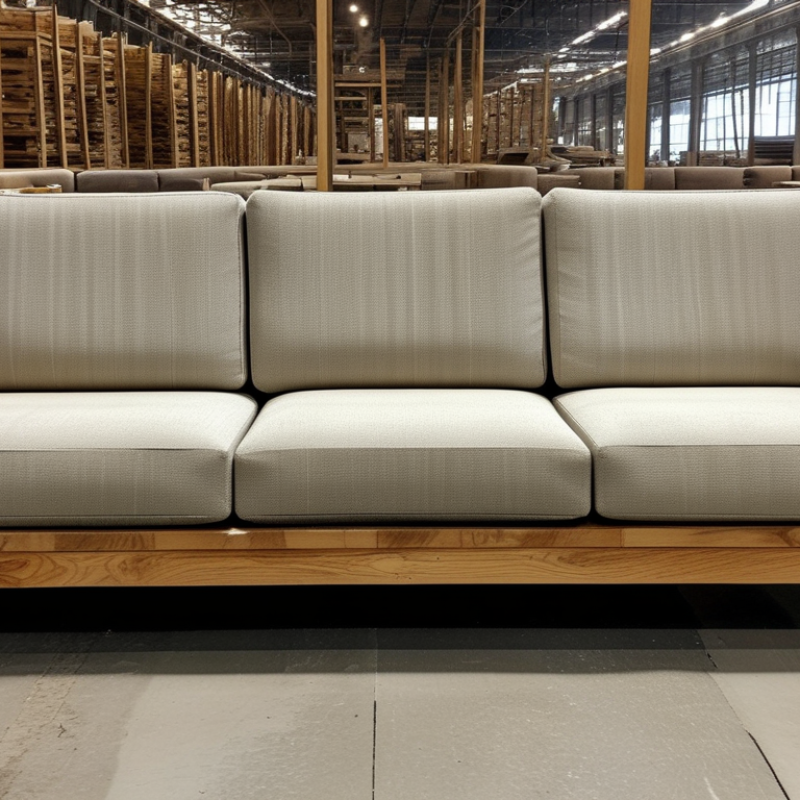
2026 Top How to Identify a Kiln Dried Hardwood Sofa Frame
Kiln-dried hardwood is defined by moisture content, not appearance. For furniture, a practical target is usually 6–12% moisture. The USDA Forest Products Laboratory’s Wood Handbook, FPL-GTR-282, reports indoor equilibrium moisture commonly near 6–8% under ordinary household conditions. The broader 6–12% range allows regional humidity differences. It is not a universal legal definition.
Ask for moisture readings from several frame locations. A calibrated meter should test rails, legs, and hidden end grain. Readings should remain fairly consistent. One reading proves little. The USDA report explains that species, grain direction, and humidity affect dimensional movement. AWI Quality Standards Illustrated also commonly uses controlled moisture targets for interior woodwork. A frame above 12% may shrink after installation. That movement can loosen joints or create squeaks.
Visual inspection still matters. Look for straight grain, limited large knots, tight corner blocks, and cleanly fitted joints. Kiln drying itself leaves no reliable visual signature. Some suppliers may overstate the term. I would not reject a frame at 12.1% without checking the room’s humidity and the meter’s calibration. That small judgment matters. A professional inspection should record the species, measurement points, room conditions, and joint construction, rather than relying on a sales label.
| Inspection Dimension | Typical Reference or Target | How to Check | What the Result Means |
|---|---|---|---|
| Wood moisture content | Approximately 6–12% for furniture lumber, depending on climate and indoor conditions | Use a calibrated pin or pinless moisture meter on several accessible, untreated areas | Readings within the expected range generally indicate wood conditioned for indoor furniture use. One reading alone is not proof of kiln drying. |
| Moisture consistency | Small differences between comparable frame members; avoid persistently high or highly uneven readings | Measure rails, posts, corner blocks, and visible end grain in multiple locations | Large variations can indicate inadequate conditioning, wet storage, or different wood components. |
| Hardwood species identification | Common structural hardwoods include maple, beech, oak, ash, birch, and rubberwood | Inspect grain, pores, color, density, and the cut ends; compare with a reputable wood reference | Species identification supports an assessment of durability, but appearance alone cannot confirm moisture history. |
| End-grain appearance | Clean, solid end grain without fresh dampness, decay, or extensive splitting | Examine exposed ends, cutouts, and unfinished areas with a bright light | Small checks may occur as wood dries, but deep splits, soft areas, or fungal staining are warning signs. |
| Warping and twisting | Rails and posts should remain straight and sit flush at the joints | Place a straightedge along frame members and inspect the frame on a level surface | Pronounced bowing, cupping, or twisting may result from moisture changes or inadequate material selection. |
| Cracks and splits | No structural split through a rail, post, stretcher, or joint area | Check screw holes, mortises, dowel locations, knots, and board ends | Cracks in load-bearing areas can reduce strength and may grow as the wood responds to indoor humidity. |
| Joinery quality | Tight, well-aligned joints with adequate adhesive, screws, dowels, mortise-and-tenon, or corner blocks | Apply moderate hand pressure and look for movement, gaps, or squeaking | Strong joinery is essential because kiln drying improves dimensional stability but does not compensate for weak construction. |
| Frame moisture exposure | No visible swelling, water staining, mold, or musty odor | Inspect the underside, rear rail, corners, and areas near the floor | Current water exposure can raise moisture content even when the lumber was originally kiln dried. |
| Kiln-drying evidence | Supplier documentation should identify the hardwood, drying process, and final moisture target | Request a material specification, moisture inspection record, or written construction description | Documentation is more reliable than color, weight, or a “kiln dried” label used without measurable details. |
| Indoor acclimation | Wood should be allowed to reach equilibrium with the installation environment before final assembly when applicable | Confirm storage in a dry, ventilated indoor area and follow the furniture maker’s instructions | Acclimation helps reduce later shrinkage, swelling, joint gaps, and squeaks. |
| Overall assessment | Combine moisture readings, wood condition, frame geometry, joinery, and documentation | Use a multi-point inspection rather than relying on one visual feature or one meter reading | A stable, well-joined frame with consistent moisture readings and supporting documentation provides the strongest indication of quality. |
Note: Moisture content varies with wood species, temperature, relative humidity, and measurement method. A 6–12% range is a practical furniture reference, not a universal pass/fail limit for every climate or component.
: Indoor wood commonly reaches about 6–8% moisture content. Local humidity can change this range.
Use a calibrated pin meter on hidden rails, joints, and lower sections. Avoid end grain and fresh cuts.
No. Take several readings. Wood varies.
The oven-dry method measures moisture through mass loss. It provides a stronger reference than a handheld meter.
Record temperature, humidity, wood species, reading locations, test date, and meter calibration details.
Check for severe grain slope, large knots, loose knots, knot clusters, checks, and splits. Small tight knots may be acceptable.
Place a straightedge against each rail. A rail should not rock, twist, or show a clear bow.
Inspect mortise-and-tenon, dowel, or corner-block joints. Press opposite corners gently. Movement suggests racking.
Yes. Upholstery may hide end-grain splits or weak joints. Request inspection photographs or remove fabric where possible.
No. Visual rules offer useful guidance, but they do not reveal every hidden defect. I might still miss one.
Learning how to identify a kiln-dried hardwood sofa frame starts with understanding moisture control. Properly kiln-dried furniture wood typically reaches a moisture content of 6–12%, which helps reduce shrinking, cracking, and warping after production. Buyers can request moisture documentation or use a calibrated pin meter, with readings verified according to ASTM D4442 procedures. A durable frame should also use strong hardwood, ideally with a Janka hardness rating above 1,000 lbf, providing better resistance to everyday stress and impact.
A careful visual and physical inspection is equally important. Look for straight grain, limited knots, minimal twisting, and tightly fitted joints that align with the quality principles described in ASTM D245. Reliable manufacturers should be able to provide production evidence, including kiln logs, moisture-content readings, and relevant EN 16139 performance-test results. Together, these checks offer a practical method for judging whether a sofa frame is stable, strong, and built for long-term household use.
