How to Stop Sofa Cushions from Sliding Off

Time:2026-11-08 Author:Henry
0%

Sofa cushions should stay where you place them, not creep toward the floor every time you sit down. If you are searching for How to stop sofa cushions from sliding off, start by noticing what happens beneath them. A smooth leather seat, worn upholstery, or flattened cushion backing can reduce grip. Even a small tilt in the seat deck may encourage cushions to inch forward. The clues are often visible: a shiny patch on the fabric, a loose cushion cover, or a gap that widens after someone stands up.

A reliable fix begins with the simplest checks. Remove the cushions and vacuum crumbs and dust from the seat. Then inspect the cushion covers and the sofa’s support surface. Non-slip rug mesh or purpose-made cushion grippers can add traction without changing the sofa’s appearance. Cut the material slightly smaller than each cushion, so its edges remain hidden. If the cushions are sagging or the upholstery feels slick, a grip pad may help, but it will not correct worn foam or a sloping frame.

As upholstery-care expert Jane Smith puts it, “A little grip beneath the cushion can make everyday sitting feel much more settled.” Treat that as a practical reminder, not a guarantee: sofa materials and cushion designs differ, and some pads can leave marks on delicate finishes. Test any product in a hidden spot first. The steps ahead compare low-cost fixes, explain how to fit them neatly, and show when a loose cushion may signal a deeper support problem. A small adjustment may be enough. Sometimes it isn’t.
How to Stop Sofa Cushions from Sliding Off

Common Causes of Sofa Cushions Sliding

Sofa cushions often slide because the surfaces beneath them offer too little grip. Smooth leather, slick synthetic fabric, or a tightly woven seat can let a cushion shift when someone sits down or stands up. The cushion cover matters, too. A loose, slippery cover may move over the insert, even when the insert stays in place. That distinction is easy to miss. Check whether the cover has bunched at one corner or whether the whole cushion has moved across the seat.

Cushion shape and seat condition can also contribute. An insert that has flattened with use may no longer fit snugly inside its cover, leaving less friction against the sofa. A sagging seat deck or a frame that dips toward the front can encourage gradual movement. Watch the cushion after sitting in different spots; repeated shifts in one direction may point to the seat, not the fabric. It is tempting to blame restless pets or frequent use, but those may only reveal an underlying fit or surface problem. A quick inspection can narrow it down. Look for compressed foam, stretched upholstery, and gaps between the cushion and sofa arms.

Check the Sofa and Cushion Materials

Before adding grip pads, check what the sofa and cushion covers are made of. Run your hand over the sofa seat and the cushion underside. Smooth leather, coated fabric, or tightly woven synthetic material can create a low-friction surface. A textured woven cover may hold better, even when the sofa itself feels slick. Feel the difference.

Turn a cushion over and inspect its backing. Some covers have a smooth lining that slides against the sofa, while others have a rougher weave or small fabric loops. Check for worn patches, flattened nap, or loose threads; a once-grippy surface can become slippery with use. Dust and crumbs can also reduce contact, so vacuum both surfaces before testing anything.

Press the cushion into place, then push it gently toward the edge. Notice whether the cushion moves as one piece or whether its cover shifts over the filling. That distinction matters. If the cushion bottom is smooth and the sofa seat is slick, a thin, breathable non-slip layer may help. Choose one suited to upholstery, and test it on a hidden area first. Some materials can leave marks or trap moisture, and product labels do not tell the whole story. I learned that the hard way with a cushion that still crept forward. After cleaning, check the fit again; a loose cushion may slide even when the fabrics have decent grip.

How to Stop Sofa Cushions from Sliding Off: Check the Sofa and Cushion Materials

Compare the contact surfaces: smooth-on-smooth combinations tend to offer less grip, while a non-slip layer can help reduce movement. Ratings are qualitative guidance, not laboratory measurements; fabric weave, finish, wear, and cleanliness can change the result.

Choose a Suitable Non-Slip Grip

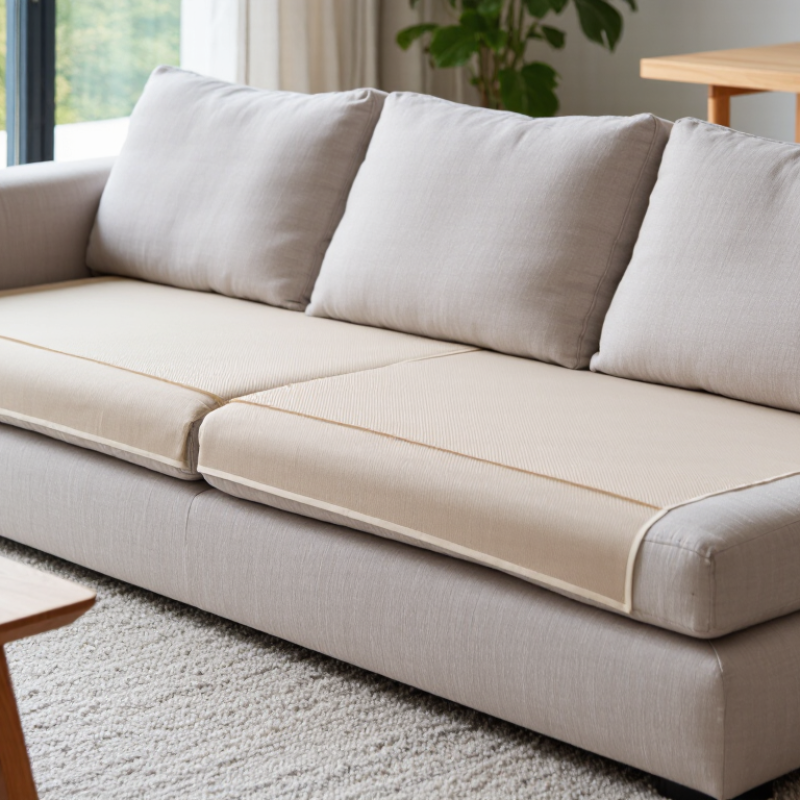
A suitable non-slip grip can keep sofa cushions in place without changing how the sofa feels. Choose a thin, flexible mat designed for upholstery or furniture, rather than a thick pad that raises the cushion. Measure the cushion base and trim the grip slightly smaller, so its edges stay hidden. Small details matter. A neat fit helps prevent corners from curling when people sit down.

Check the sofa fabric and cushion underside before choosing a material. Open-weave grips often work well between smooth surfaces, while textured cushions may need less added traction. Avoid adhesive-backed sheets unless the manufacturer confirms they are safe for your upholstery. Adhesive can leave marks, and some materials may transfer color. Test a small piece in a hidden spot first. It may take a little adjustment; one pad does not suit every sofa.

Tips: Lift cushions and clean away dust before fitting the grip. Place it flat, then press the cushion down evenly. If sliding continues, check whether the pad is too small or folded. Wash or replace it when lint builds up, and let it dry fully before putting it back.

Position and Secure the Cushions

Place each cushion squarely against the sofa back, with its lower edge resting evenly on the seat. Cushions that sit at an angle can creep forward as people stand up. Check whether the seat fabric is slick or uneven, too. Small shifts matter.

If the cushions have different shapes, try swapping their positions. A firmer cushion may stay put better at the front, while a softer one can fit snugly against the back. Rotate cushions regularly to even out wear, but note which arrangement feels stable. I still get this wrong sometimes: a neat-looking setup can slide as soon as someone leans on it.

For extra grip, place a thin, non-slip upholstery mat beneath each cushion. Trim it so it stays hidden and does not bunch at the edges. Test it gently. Make sure the material is suitable for your sofa’s fabric, and follow any care guidance to avoid marks or damage. If the cushions have removable covers, check that the covers are fully seated before replacing them. A loose cover can pull the cushion forward, even when the cushion is positioned well. Avoid sharp pins or improvised fasteners; they can damage fabric and create uncomfortable bumps.

Test the Setup and Maintain the Grip

How to Stop Sofa Cushions from Sliding Off

After fitting a non-slip mat or cushion fastener, test the setup before settling in for the evening. Place each cushion squarely, then sit near the front edge and shift your weight gently from side to side. Stand up and check whether the cushion moved, twisted, or lifted at a corner. Small movements matter. Repeat the test in your usual seating spots, since one cushion may slide more than another. If it still shifts, reposition the grip or check that it covers enough of the cushion base.

Keep the contact surfaces clean and dry; dust and crumbs can reduce friction. Follow the care instructions for both the sofa and any grip material, and avoid sticky products that could mark delicate upholstery. Check the setup every few weeks, especially after vacuuming or washing cushion covers. It is tempting to assume one adjustment has solved everything, but cushions can behave differently as their filling settles. I would recheck after a few days, too. That extra check is easy to forget. A quick tug before sitting can reveal a loose corner before it becomes annoying.

FAQS

Why do sofa cushions slide across the seat?

Smooth leather, coated fabric, or tightly woven material may offer little grip. Dust can make the problem worse.

How can I tell whether the cover or whole cushion is moving?

Watch the cushion after sitting down. If the filling stays put but the cover bunches at one corner, the cover is shifting.

Can a worn cushion cause sliding?

Yes. Flattened foam may fit loosely inside its cover, reducing friction. Check for gaps near the sofa arms.

Could the sofa seat itself be the problem?

It could. A sagging seat or a frame dipping toward the front may pull cushions forward. Look for repeated movement in one direction.

What should I clean before adding a grip layer?

Vacuum dust and crumbs from the sofa seat and cushion underside. Small bits of debris matter.

What kind of grip layer should I choose?

Choose a thin, flexible, breathable grip made for furniture. Trim it slightly smaller than the cushion base so its edges stay hidden.

Is adhesive-backed material a good choice?

Be cautious. Adhesive may mark upholstery or transfer color, so test a small piece in a hidden spot first.

What if the cushion still slides after fitting a grip?

Check whether the grip is folded, too small, or covered with lint. I once expected a pad to fix everything; the cushion still crept forward. A loose fit may need attention, too.

Conclusion

How to stop sofa cushions from sliding off begins with identifying why they move. Smooth upholstery, slippery cushion covers, a poor fit, or frequent sitting can all loosen cushions over time. Check the sofa seat and the underside of each cushion to understand which surfaces are causing the problem, and make sure the cushions are correctly matched to their positions.

Choose a non-slip grip that suits both materials, such as a suitably sized grippy pad placed between the sofa and cushion. Position each cushion evenly, pressing it into place so the pad makes good contact without bunching. Test the setup by sitting down and getting up as usual, then adjust the pad or cushion if it shifts. Regularly straighten the cushions and check that the grip remains clean, flat, and effective.

Henry

Henry

Henry is a dedicated marketing professional with a profound expertise in the company's offerings. With years of experience in the industry, he possesses an impressive understanding of the market dynamics and consumer behaviors that drive success. Henry is committed to sharing his insights through......