Kado Home
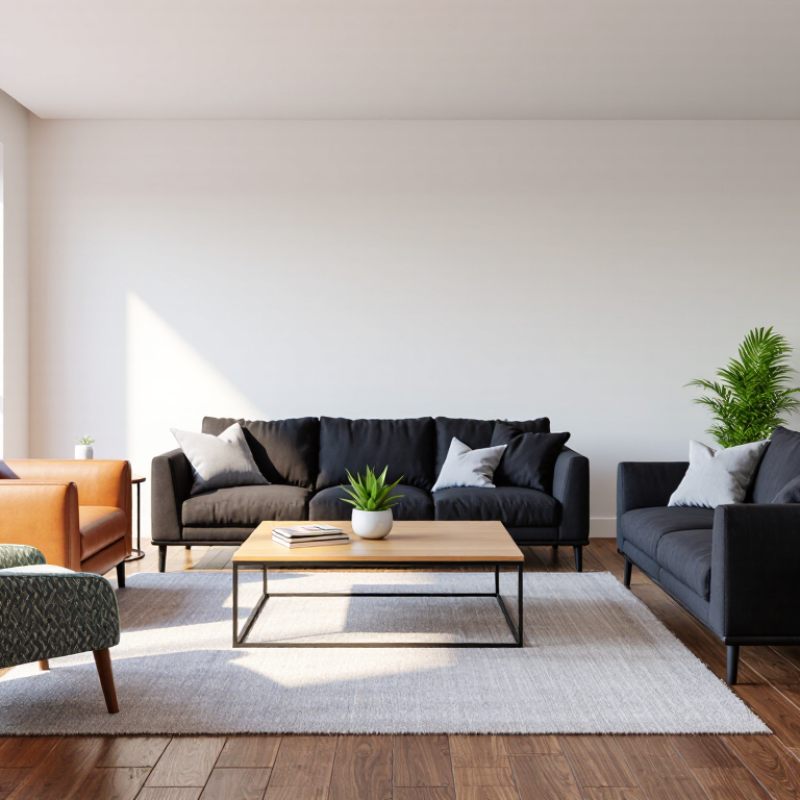
A living room feels more personal when its seating does not come as a matching set. A deep, charcoal sofa can sit comfortably beside a caramel leather chair or a compact, patterned armchair. The trick is giving each piece a reason to belong. Repeat one color, balance different shapes, and leave enough space for people to move around the furniture.
How to mix and match a sofa with different armchairs starts with the room itself. Consider the sofa’s size, the chair heights, and where people will sit or talk. A low sofa may look unbalanced next to a tall wingback chair, while two bulky arms can crowd a narrow walkway. Before buying, measure the available floor space and compare fabric or wood samples in daylight. Colors often shift under warm lamps. Small details matter.
This guide explores seven practical ways to combine sofas and armchairs, from coordinating colors to mixing textures and eras. You might pair a smooth linen sofa with a nubby wool chair, then echo a sofa cushion’s muted green in a small detail nearby. Keep the main palette simple. Let one piece stand out. There is no perfect formula, and a layout that looks balanced in a showroom may feel awkward at home. Try moving the chairs, sit in each seat, and notice whether conversation feels natural. A little mismatch can add character. Too much can feel accidental. That distinction takes a bit of honest trial and error.
Start with the room’s usable dimensions, not just its floor area. Measure wall lengths, door swings, window locations, and the route people take across the room. A sofa may fit neatly on paper yet block a doorway once its arms and cushions are included. Leave clear paths around seating, and check that an armchair can turn toward the sofa without scraping a wall. Small rooms often benefit from one compact sofa and a movable chair; larger rooms can handle a wider sofa with two chairs. Still, matching every measurement does not guarantee a room will feel comfortable.
The U.S. Census Bureau’s 2019–2023 American Community Survey reports an average household size of 2.53 people. That figure is a useful planning reference, not a seating formula. Count the people who use the room daily, then consider how often guests visit. A generous three-seat sofa may suit a busy household, while a smaller sofa and flexible armchair can work better in a tight layout. A common mistake is planning for occasional guests and leaving everyday walkways cramped. It is easy to misjudge.
Tips: Tape the sofa and chair outlines onto the floor before buying. Sit in the taped “seats,” check the walking route, and notice whether the conversation distance feels natural. If the layout feels awkward, revise it; measurements alone can miss that.
Build the palette around one shared undertone, not identical upholstery. A soft gray sofa with a cool blue cast pairs naturally with a slate-blue armchair; a warm beige sofa works better beside rust, olive, or caramel. The 2024 Design Trends Report from the National Kitchen & Bath Association drew on responses from more than 600 industry professionals and noted continued interest in natural, calming colors. Treat that as direction, not a rule. A room still needs contrast.
Try a 60-30-10 balance: use the sofa color across roughly 60 percent of the room’s visual weight, a secondary chair color for 30 percent, and a small accent for the rest. These are practical design proportions, not a measured guarantee. Repeat the chair’s color in a cushion, artwork, or the narrow edge of a rug. Test fabric samples beside the window and again at night; daylight can make a green-gray look unexpectedly blue. I’ve learned that matching swatches too precisely can feel flat. A little mismatch helps. Keep the undertone consistent, then vary texture—think nubby wool against smooth cotton—to make the pairing feel intentional.
A sofa and armchairs do not need to match to feel at home together. Aim for a shared detail instead: a similar wood tone, a repeated color, or upholstery with a related texture. For example, a soft gray sofa can sit beside rust-colored linen chairs if both have warm wooden legs. The connection should be visible, but not identical.
Balance shape as carefully as color. A broad, low sofa can feel heavy beside two upright, narrow chairs, so add a rounded side table or a floor lamp with a substantial base. Conversely, a curved sofa pairs well with armchairs that have cleaner lines. Leave enough space around each piece; crowded furniture can make even a thoughtful mix feel accidental. That can happen.
Materials add useful contrast. Combine smooth leather with nubby fabric, or a woven chair with a plain cotton sofa. Keep the palette restrained when textures are busy. Before buying, compare fabric samples in daylight and evening light; colors can shift more than expected. Measure the room and check seat heights, too. A chair that looks elegant online may feel awkward beside a deep sofa. Not every contrast succeeds. If a pairing seems slightly wrong, try moving the chairs or repeating one small detail, such as a cushion color, before replacing anything.
A comfortable seating plan starts with conversation, not matching upholstery. Place the sofa where it anchors the room, then angle two armchairs slightly toward it. This creates an easy speaking distance without making guests face each other like an interview. Leave roughly 45 to 90 centimeters between seats when space allows, so people can pass without turning sideways. Keep a small table within reach of each seat. A mug should not need a balancing act.
Mix shapes thoughtfully. Pair a broad, low sofa with chairs that have slimmer arms, or balance a rounded sofa with a more structured chair. Check seat heights before buying; a large difference can make conversation feel awkward. Repeat one color or material across the pieces, such as warm wood legs or a muted blue cushion, then vary the fabrics for depth. Keep a clear walking route through the room, especially near doors. It is tempting to push every seat against a wall, but that can make a large room feel distant. Try the layout for an evening. Notice whether people turn naturally toward one another, and adjust the chairs if they do not. A slightly imperfect arrangement that invites people to sit is often better than a perfectly symmetrical one.
Suggested seat-to-seat distances are practical planning targets, not universal rules. Adjust them to suit your furniture, room size, and how you like to talk.
Textiles and accessories can make a sofa and armchair feel related without making them identical. Start with one shared color, such as rust, soft blue, or warm cream. Repeat it in two or three places: a cushion, a throw, and a small ceramic lamp. Keep the shades close, not exact. A little variation feels more natural.
Texture matters just as much. Pair a smooth linen sofa with a nubby wool chair, then echo one texture in a cushion or rug. In a room with a leather armchair, a woven throw can soften the contrast. Check the fabrics in daylight; colors often shift beside a window. Small details count.
Accessories should connect the seating, not crowd it. A patterned cushion can pick up both the sofa color and the chair’s accent shade. A rug beneath the front legs helps the pieces share one visual zone. Leave some space bare, too. I once added too many cushions, and the room looked busy rather than collected. Remove one item and look again from the doorway. If the arrangement feels slightly imperfect, that may be fine; a lived-in room rarely looks perfectly balanced.
No. Share one detail, such as warm wooden legs or a repeated color. Exact matches can feel flat.
Keep their undertones similar. Pair a cool gray sofa with slate blue, or warm beige with rust or olive.
Let the sofa carry about 60 percent of the room’s visual weight, chairs 30 percent, and accents the rest. Treat it as a guide, not a rule.
Add it to a cushion, artwork, or a thin rug border. Small echoes are enough.
Daylight and evening light can change how colors look. A green-gray sample may appear blue by the window.
Pair a broad, low sofa with a rounded side table or a substantial floor lamp. Give each piece breathing room.
Try smooth leather with nubby fabric, or a woven chair beside a plain cotton sofa. Busy textures need a restrained palette.
Measure the room and compare seat heights. A chair can look elegant online but feel awkward beside a deep sofa.
Move the chairs or repeat one small detail, such as a cushion color. I would test that before replacing anything.
Mixing a sofa with different armchairs begins with understanding the room and how people will use it. Measure the space, consider the number of seats you need, and leave enough room to move comfortably. Then build a coordinated color palette: the pieces do not need to match exactly, but shared hues or complementary tones can help them feel connected. For How to mix and match a sofa with different armchairs, think about contrast as well as harmony. Pairing different shapes, materials, and styles can add character, while balancing bold pieces with simpler ones keeps the room from feeling crowded.
Arrange the seating to support both comfort and conversation, with chairs and sofa positioned at inviting angles and within easy reach of one another. Finally, bring the combination together with textiles and accessories. Cushions, throws, rugs, and carefully chosen decorative details can repeat colors or textures across the room, making a varied collection of seating feel intentional and welcoming.
